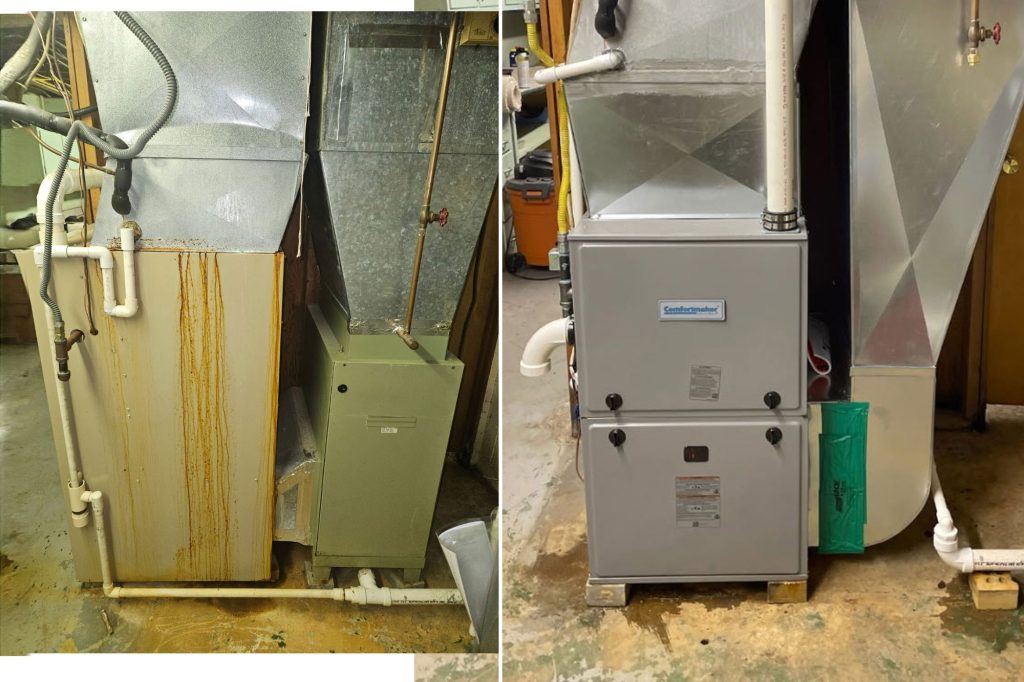
R-22.
It probably doesn’t mean anything when you hear that phrase, but it will now. R-22 is a colorless Hydrochlorofluorocarbons (HCFC) gas formerly used widely as a refrigerant in residential and commercial AC systems. You might know it as freon.
In 2020, it was banned. Why was R-22 banned? It depletes the ozone layer and contributes to global warming. The Environmental Protection Agency (EPA) first began phasing it out of production before ultimately banning it.
What if my system runs on R-22 and how would I know?
While older systems (mostly those manufactured before 2010) running on R-22 can still be used, it cannot be manufactured or repaired with R-22.
Look at the manufacturer data plate on your unit. The label often lists HCFC-22 or R-22 under the refrigerant section.
There isn’t a need to panic if your unit is using R-22, but because the refrigerant is no longer produced, repairs are extremely expensive and an upgrade is ultimately going to be on your list.
What refrigerants are used in modern HVAC systems?
The alternative is newer, environmentally friendly and more efficient refrigerants (such as R-410A and the newest option R-454B). Lower those energy bills and keep our air clean.
R-454B boasts a nearly 80% lower Global Warming Potential (GWP) than R-410A.
What is GWP?
According to the EPA, “the GWP is a measure of how much energy the emission of 1 ton of a gas will absorb over a given period of time, relative to the emission of 1 ton of carbon dioxide (CO2). The larger the GWP, the more that a given gas warms the Earth compared to CO2 over that time period. The time period usually used for GWPs is 100 years.”
What should I do if my HVAC system is running on R-22 and I want to upgrade?
Replacing your unit comes with costs, but to ensure you are getting the best energy efficiency out of your system and comply with regulations, this is the move. Shafer’s HVAC is here to help and explain the entire process from start to finish.
What are the steps in upgrading my HVAC system to remove R-22?
- Remove the R-22. Technicians will come in to look at your lines and remove the refrigerant completely. And remember, only EPA-certified technicians can handle refrigerants.
- Replace the components. This includes the outdoor condensing unit and the indoor evaporator coil (which absorbs the heat and moisture from the air inside your house).
- Line flush. This is done with nitrogen to remove old mineral oil, which is incompatible with modern refrigerants.
- Retrofit parts. A new thermal expansion valve (TXV) is installed. This regulates the flow of refrigerant into the evaporator coil based on cooling demand, keeping the system efficient.
- Remove moisture. This is done with a vacuum pump (below 500 microns), designed to remove all moisture, air and non-condensable gases to prevent acid formation and compressor failure.
- Charge the system. The new refrigerant is added, which ultimately cools the air passing through it.
- Test the system. A leak check is performed and the system is tested to verify pressures, temperature and superheat (the temperature of refrigerant vapor after it has completely boiled into a gas).
This entire process is usually completed within 24-48 hours.
If your system is running on R-22, the clock isn’t necessarily ticking loudly, but it is ticking.
Upgrading isn’t just about compliance. It’s about getting ahead of a problem before it becomes an emergency and landing on the other side with a system that runs cleaner, more efficiently and costs less to operate month over month.
At Shafer’s HVAC, we are here to assess your current system, walk you through your options honestly and handle every step of the transition.
Contact us today to schedule an assessment.